


The 9-10 Month Postpartum Crash No One Warns You About (And Why It's Normal)

For personalised support, book your free 10-minute chat here.
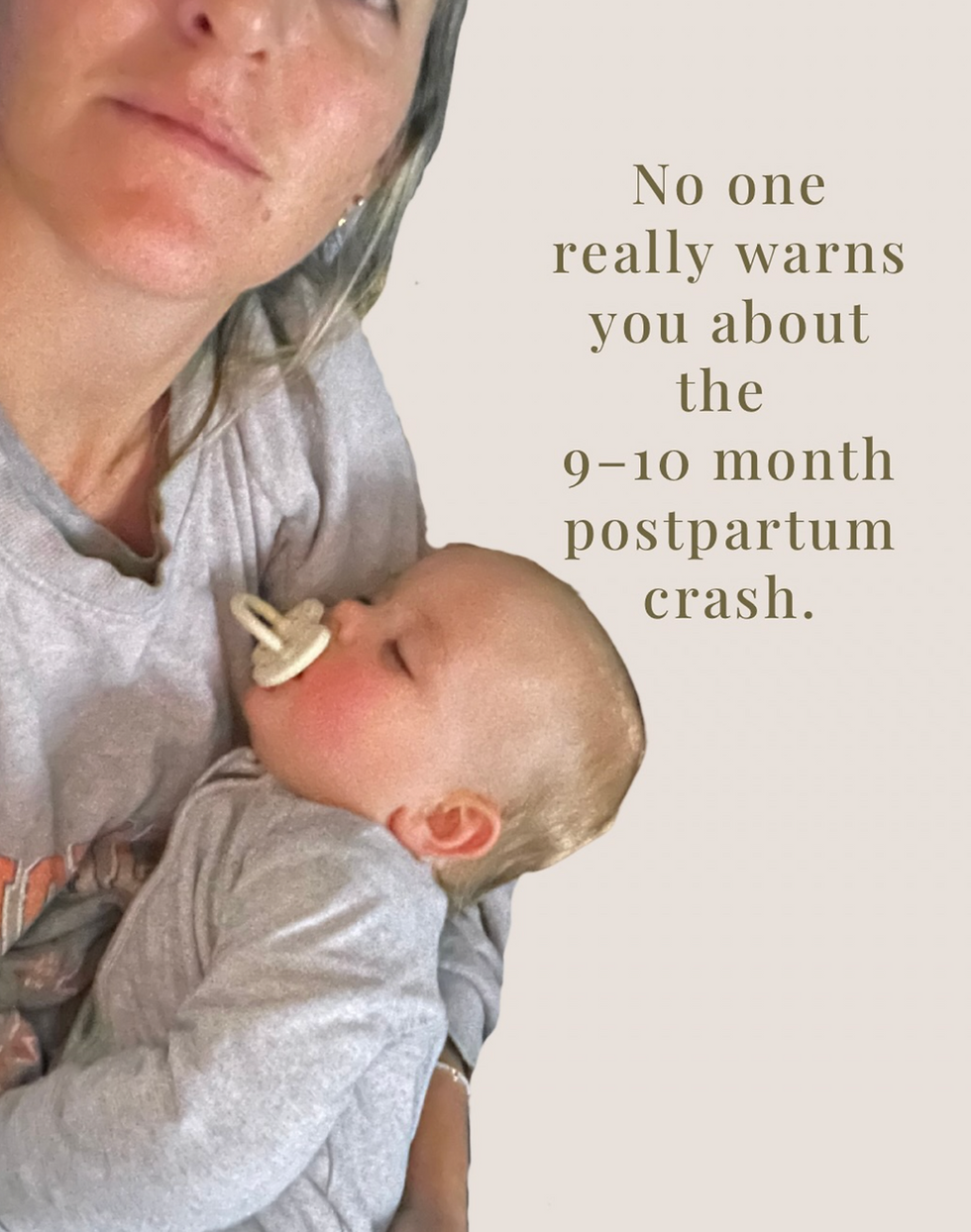
No one really warns you about the 9-10 month postpartum crash.
Around 9-10 months postpartum, many women feel like they should be back to themselves by now.
Your baby is older. You're doing more. You may be back at work. You might have even had a period where you felt really good.
But then it all comes crashing down.
Energy drops. Mood feels flat. Anxiety creeps in. Sleep worsens again.
And you think: What's wrong with me? I should be better by now.
But here's the truth: this is a common physiological turning point, and one that isn't talked about very often.
Why the 9-10 Month Postpartum Crash Happens
By now most women have strated to feel 'better'.
The newborn phase has passed.
Life looks more "normal".
But then comes the dip.
Here's what's actually happening:
1. Hormones Shift Again
Around this time, breastfeeding patterns change, cycles may return, and hormones shift again.
This is a predictable physiological transition, not "failing to cope".
What's happening:
If you're breastfeeding, patterns often reduce (baby eating more solids, dropping feeds, night weaning)
Prolactin levels start to decline
Oestrogen and progesterone may fluctuate as your cycle prepares to return
For some women, the first postpartum period arrives - bringing another big hormonal shift
These hormonal changes can affect energy, mood, sleep, and anxiety levels.
2. Your Immune System "Wakes Back Up" After Months of Suppression
During pregnancy and breastfeeding, your immune system is suppressed to protect the baby.
Around 9 months postpartum, it starts to re-awaken.
This is why:
Thyroid symptoms (fatigue, brain fog, weight changes, hair loss, mood swings) often show up months later, not straight away
Inflammation and autoimmune flare-ups can occur
You might suddenly feel more run down or get sick more easily
Your immune system has been quietly recalibrating - and now it's making itself known.
3. Your Baby Is Growing
Your baby is more mobile, more aware of separation, and often sleeping less again.
More movement means more vigilance. More separation awareness means more sleep disruption.
Your "invisible load" increases - and you may be back at work on top of it all.
4. You're Likely Severely Depleted
Pregnancy and breastfeeding are incredibly demanding on your body's nutrient stores.
Many women cope for months before feeling it.
The "crash" isn't sudden - it's the result of depletion over time.
Pregnancy and breastfeeding deplete:
Iron
Zinc
Magnesium
B vitamins
Omega-3 fatty acids
Protein
Calcium
If these haven't been adequately replenished, the effects compound - and by 9 months postpartum, your body can't keep compensating anymore.
This Is Normal - And It's Still Postpartum
If you're here right now, you're not "doing it wrong".
You just need more support, nourishment, and understanding.
This is still postpartum.
The narrative that postpartum ends at six weeks (or even six months) is dangerously incomplete.
True postpartum recovery - particularly when it comes to nutrient repletion and nervous system regulation - can take much longer.
What Helps at 9-10 Months Postpartum
If you're in the postpartum crash right now, here's what can help:
Replenish Key Nutrients
Focus on:
Iron-rich foods (red meat, liver, dark leafy greens) and consider testing iron levels
Zinc (oysters, red meat, pumpkin seeds)
Magnesium (leafy greens, nuts, seeds, dark chocolate, Epsom salt baths)
B vitamins (eggs, meat, fish, leafy greens)
Omega-3s (fatty fish, fish oil, algae oil)
Quality protein at every meal
Work with a practitioner to identify what you specifically need - not all postpartum women need the same support.
Prioritise Blood Sugar Stability
Irregular eating, long gaps between meals, and relying on quick carbs and caffeine all worsen energy crashes, mood swings, and anxiety.
Aim for:
Protein at every meal and snack
Regular eating (3 meals, 2-3 snacks)
Balanced meals with protein, fat, and complex carbs
Support Your Nervous System
Your nervous system has been under enormous demand. It needs active support, not just "pushing through".
Try:
Rest when you can (even small moments)
Gentle movement (walking, stretching, yoga)
Breathwork
Time outside
Reducing stimulation where possible
Herbal nervous system support (chamomile, lemon balm, passionflower, ashwagandha - always under practitioner guidance)
Get Your Thyroid Checked
If you're experiencing fatigue, brain fog, hair loss, weight changes, or mood swings around 9 months postpartum, ask your GP to check:
TSH
Free T4
Free T3
Thyroid antibodies (TPO and TG)
Postpartum thyroid issues are common and often missed.
Talk About It
Please don't compare yourself to what you see on social media, or how well you assume other mothers are coping.
Most of what we struggle with isn't visible.
Talk about it. Chances are, other mums are feeling it too.
When to Seek Professional Help
If what you're experiencing feels overwhelming, persistent, or like it's affecting your ability to care for yourself or your baby, please reach out to your GP or a mental health professional.
You deserve proper support.
The 9-10 month postpartum crash can be physiological, but it can also overlap with or trigger postpartum depression or anxiety - and that requires professional care.
There's no shame in asking for help. In fact, it's one of the most important things you can do.
You're Not Doing It Wrong
If you're postpartum and feeling worse, not better - you're not failing.
This is a predictable physiological transition that many women experience but few talk about.
Your body has been through an enormous amount. Pregnancy, birth, and months of breastfeeding have drawn heavily on your nutrient stores. Your hormones are shifting again. Your immune system is recalibrating. Your baby's needs are changing.
You're not broken. You're depleted.
And depletion can be addressed.
How I Support Women Through the 9-10 Month Postpartum Phase
In my practice, I work with women who are struggling at 9 months postpartum (and beyond) and want personalised support to actually recover - not just survive.
We look at:
Nutrient repletion (testing where needed)
Blood sugar and energy stability
Nervous system support
Herbal medicine
Thyroid function
Sleep and stress management
Realistic, sustainable protocols
I offer 1:1 consultations via Zoom Australia-wide (and in person in the Nambucca Valley on request).
If you're feeling depleted, overwhelmed, or like you're not recovering the way you thought you would, you're welcome to book a free discovery call to see if we're the right fit.
This Is Still Postpartum
The 9-10 month postpartum crash is real, common, and physiological.
You're not doing it wrong. You just need more support, nourishment, and understanding.


Comments